


Windmolens, tulpen, dijken, files. Typisch Nederlands. Net als fietsen. Al sinds mensenheugenis zijn fietsen een vast onderdeel van het Nederlandse straatbeeld. Dit heeft geleid tot een rijke geschiedenis, waarin Batavus een hoofdrol speelt.
Batavus is opgericht in Heerenveen. Op 15 september 1904 opende Andries Gaastra zijn winkel waar hij klokken en naaimachines verkocht. Twee jaar later kwamen de eerste fietsen in zijn winkel, die met paard en wagen vanuit Duitsland waren vervoerd.
Vanaf de jaren 50 was er veel vraag naar fietsen. Iedereen wilde er een hebben. Batavus investeerde in de modernste fietsenfabriek ter wereld. Op 19 september 1956 vierden het management en 350 medewerkers de officiële opening. Typisch Batavus. Altijd vooruitstrevend. Toen en nu. Sindsdien hebben we miljoenen kwaliteitsfietsen geproduceerd en vele prijzen, innovaties en sportieve prestaties behaald. Fietsen van gisteren, fietsen van morgen. Altijd Batavus.
Bekijk hieronder de geschiedenis van Batavus eens goed.
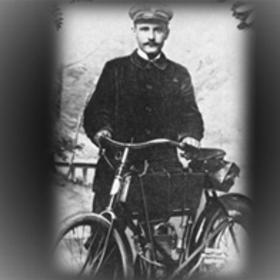
1904: Het begin
Op donderdag 15 september 1904 opende Andries Gaastra zijn winkel waar hij klokken en naaimachines verkocht. Twee jaar later breidde hij zijn assortiment uit met fietsen van het Duitse merk Presto. Kort daarna begon hij zijn eigen fietsen te produceren onder de merknaam Batavus.
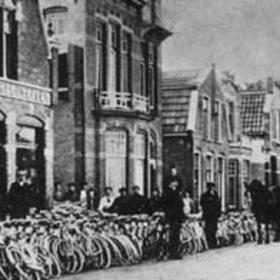
1913: Geleverd met paard en wagen
De eerste 'Presto'-fietsen die door Batavus worden geïmporteerd, komen per paard en wagen aan. In 1910 krijgt de heer Gaastra het exclusieve recht om Presto-fietsen in Nederland te verkopen.
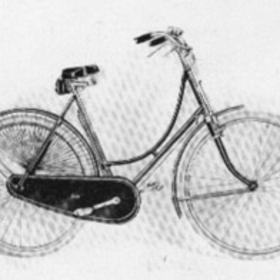
1917: Batavus damesfiets
Volgens de prijslijst van Batavus is de gemiddelde prijs van een fiets € 90.
1917: Batavus damesfiets
Volgens de prijslijst van Batavus is de gemiddelde prijs van een fiets € 90.
1929: 25th anniversary
The 25th anniversary is crowned with a photo of the management and the entire staff.
1930: Pedal carriers
During the crisis years, bicycle sales declined. Therefore, Batavus began producing pedal carriers. Later, Batavus also introduced light and heavy motorcycles (150 cc).
1936: Mopeds for men and women
In 1936, Batavus launched the first moped for both men and women. There were no legal regulations for mopeds yet; therefore, you simply needed a driver's license. For this reason, the moped was not yet a commercial success in the 1930s.
1945: A new factory
During the Second World War, the company comes to a standstill. After the war years, the demand for bicycles rises explosively. Batavus invests in completely new machinery.
1956: Modern factory
On September 19, 1956, the new Batavus factory was officially opened. At that time, Batavus employed 350 people and possessed the most modern machinery in the world.
1960: Seven first prizes
What a team! At a Technical Competition in Paris in which all the major moped manufacturers participated, Batavus won all seven first prizes in 1960.
1964: Batavus Show Truck
The Batavus Show Truck is deployed to showcase the motorcycles and bicycles throughout the country. Batavus still comes to you today, with the Batavus Windmee Days.
1965: Frame construction
With this conveyor chain, the frames were transported through the factory over 40 years ago to be stored.
1966: Second stage victory in the Tour de France
Unforgettable! Gerben Karstens, part of the Televizier-Batavus team, is interviewed after his second stage victory in the Tour de France. The team wins a total of 5 stages.
1967: Good paint quality
Batavus bicycles have a good paint finish. At the request of hospitals, Batavus therefore paints damaged hospital beds. The material of a hospital bed is technically closely related to a bicycle, which is why Batavus started producing hospital equipment in 1967.
1975: A gold medal
Tineke Fopma is part of the Batavus amateur cycling team. She was very successful this year. She won a gold medal at the World Championships in Mettet.
1978: Tourclub Batavus
The Tourclub Batavus started as a staff cycling club for test-riding the new Batavus models. Now the club is an independent and fully-fledged touring cycling association with a membership of 150 cycling enthusiasts.
1979: Batavus Cycling Team
Batavus makes a breakthrough in the sporting arena. The Batavus amateur cycling team dominates the Dutch racing scene with top riders such as Piet Hoekstra and Egbert Koersen.
1982: Museum
For many years, Batavus had a special museum featuring a unique collection of historical vehicles. The collection consisted of more than 150 vehicles, ranging from bicycles to motorcycles. Due to circumstances, the entire collection was sold to Shimano Japan.
In 2004, a Batavus museum was re-established in honor of the 100th anniversary, featuring a collection including high-wheelers, wooden bicycles, balance bikes, and bicycle accessories.
1984: 5 millionth bicycle!
Many millions of bicycles have already rolled off the assembly line. In August, the Queen's Commissioner Hans Wiegel assembles the 5 millionth bicycle. Time for a small celebration. Sales of mopeds are declining drastically, partly due to the mandatory helmet rule. Therefore, Batavus ceases production of...
1985: Dutch Champion
Peter Harings was part of the Batavus-Gonso team. 1985 was a banner year for him. He became Dutch Champion in both road cycling and cyclo-cross.
1986: Batavus and Atag
Batavus becomes part of the Atag group. This marks the end of a period of steady growth.
1988: 1988 - 1996: Award-winning inventions
The in-house Research and Development department does everything possible to perfect the bicycle. This results in various inventions that win awards time and again. Proprietary Batavus inventions include the Safety Handlebar, the Quick Services chain guard, the Safety Stand, and the Ergo System Stem. Each of these inventions receives the designation "Good Industrial Design".